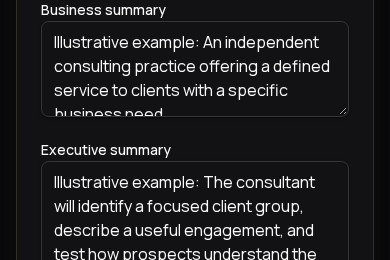
Business summary
Illustrative example: An independent consulting practice offering a defined service to clients with a specific business need.
DA GIFT FOUNDATION · BUSINESS PLANNING
A consulting plan helps turn expertise into a clear service offer, a defined client, and a manageable set of operating choices. Writing down the problem, delivery approach, and next milestone can help a solo consultant formalize the work before deciding how to grow it.
The plan and interface below show illustrative sample content. Replace it with details and assumptions that fit your business.
A USEFUL FIRST DRAFT
This template uses the fields in DaGiftFoundation’s current editor. Each starting answer is editable before you save it to your workspace.
Illustrative example: An independent consulting practice offering a defined service to clients with a specific business need.
Illustrative example: The consultant will identify a focused client group, describe a useful engagement, and test how prospects understand the offer. Capacity, timing, and fees remain owner-defined assumptions.
Illustrative example: Organizations or independent operators that need the consultant’s specific expertise for a defined project or recurring need.
Illustrative example: A potential client may need specialist help but lack the time, skills, or internal capacity to address a particular challenge.
Illustrative example: Offer a clearly scoped consulting service, agree on deliverables and communication, and review the fit after early conversations.
Illustrative example: Hourly Retainers, Project-Based Fees. These are example fee formats, not recommended rates or confirmed client demand.
Illustrative example: Draft the service scope and client intake questions, then request feedback from people in the intended customer group.
A PRACTICAL PLANNING GUIDE
A freelance consulting business plan template helps an independent professional describe the work they want to offer and the clients they hope to serve. Begin with a narrow service idea rather than a list of every skill you could sell. Name the business situation where your expertise may help, how a client would engage you, and what information you need before accepting work. A consulting business plan should distinguish experience you can document from outcomes you have not yet established. Use the executive summary to explain the proposed practice and its current priorities. The draft is illustrative: it does not claim client results, set a market rate, or establish that a particular service has demand.
In Customer Problem, describe the challenge a prospective client needs to address and the context that makes it difficult to do internally. In Solution, outline the consulting service, scope, communication, and deliverables you plan to test. Target Customer should identify the organizations or individuals who can evaluate the offer. Revenue Model can list Hourly Retainers and Project-Based Fees as sample formats, while leaving rates, payment timing, and engagement terms to your own decisions and research. Next Milestones might include writing a one-page scope, reviewing it with potential clients, and deciding what delivery capacity you can support.
The editable freelance consulting business plan includes a summary, executive summary, target customer, Customer Problem, Solution, Revenue Model, and Next Milestones. After saving, the workspace can hold goals and next actions that break an operating priority into smaller steps, with optional dates or blockers and a choice of review rhythm. This can support a consultant business plan, independent consulting plan, or solo service business outline. Use it to connect offer design with practical follow-up, such as revising a service description or preparing client questions. The product does not supply consulting rates, leads, or professional advice. Replace each illustrative assumption with information relevant to your work before using the plan to make commitments.
Make this freelance consulting plan your own in the editor.
COMMON STARTING QUESTIONS
Start with the service, target customer, customer problem, solution, revenue model, and next milestone. Add your own scope, delivery, capacity, and client-acquisition assumptions as you validate them.
The sample lists Hourly Retainers and Project-Based Fees as illustrative formats. Set actual rates and terms using your own costs, scope, experience, and client research.
Describe the type of organization or person that encounters the problem your service addresses, then speak with people in that group to refine the description.
You could draft a service scope, list questions to ask prospective clients, and review whether the proposed engagement fits your available capacity.