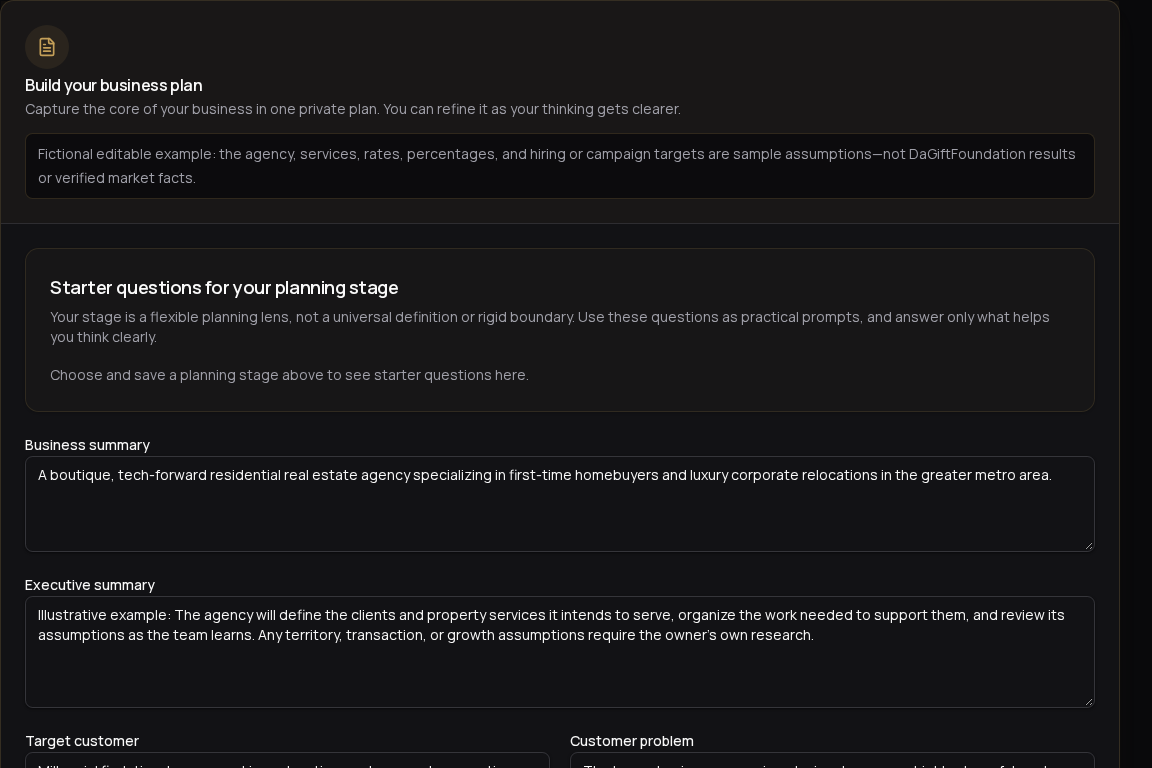
Business summary
A boutique, tech-forward residential real estate agency specializing in first-time homebuyers and luxury corporate relocations in the greater metro area.
DA GIFT FOUNDATION · BUSINESS PLANNING
Turn individual commissions into a scalable brokerage. Use this pre-built workspace to track lead generation, map your marketing, and hit your quarterly GCI goals.
Fictional editable example: the agency, services, rates, percentages, and hiring or campaign targets are sample assumptions—not DaGiftFoundation results or verified market facts.
Scaling from a solo agent to a thriving real estate brokerage requires a shift from simply selling homes to building predictable systems. A professional real estate agency business plan helps you forecast cash flow between closings, manage your marketing ROI, and set clear recruitment targets for new agents.
This free template is built for ambitious brokers and team leaders. It includes pre-filled commission models, target buyer demographics, and key milestones like launching local ad campaigns and hiring your first showing agents. Click 'Edit this Template' to launch your workspace, assign weekly lead-generation actions, and start building a scalable real estate business.
A USEFUL FIRST DRAFT
This template uses the fields in DaGiftFoundation’s current editor. Each starting answer is editable before you save it to your workspace.
A boutique, tech-forward residential real estate agency specializing in first-time homebuyers and luxury corporate relocations in the greater metro area.
Illustrative example: The agency will define the clients and property services it intends to serve, organize the work needed to support them, and review its assumptions as the team learns. Any territory, transaction, or growth assumptions require the owner’s own research.
Millennial first-time buyers seeking education, and corporate executives relocating for work who require white-glove service.
The home-buying process is notoriously opaque, highly stressful, and often lacks personalized, tech-forward communication from traditional legacy brokerages.
A modern brokerage offering end-to-end buyer education, 3D virtual tours for out-of-state clients, and a dedicated "closing concierge" to handle inspections and paperwork seamlessly.
3% commission on buyer representation; 3% commission on seller listings; 25% referral fees from out-of-state broker networks.
Recruit 3 top-producing buyer's agents and launch a hyper-local SEO and Facebook ad campaign targeting relocation keywords.
A PRACTICAL PLANNING GUIDE
A real estate agency business plan starts by stating which clients and property work the agency intends to support. The supplied example describes first-time buyers and corporate relocations in a greater metro area; these are fictional editable choices, not customer research or verified service coverage. Adapt the Target Customer field to distinguish buyers, sellers, landlords, investors, relocation clients, or another group. Use Customer Problem to capture a specific need you have heard directly, then note assumptions that still require interviews or local research. Treat a demographic label as a starting point for questions about communication, timing, property types, and support, not as proof of demand.
The Revenue Model sample lists 3% commissions for buyer representation, 3% for seller listings, and a 25% referral fee from out-of-state broker networks. These rates and arrangements are fictional planning examples, not market benchmarks, legal guidance, or an offer of agency services. Agreements and local requirements can vary; verify the terms that apply with qualified professionals. Use the field to separate possible streams, state who pays and when, and list costs or timing gaps to investigate. The editor stores your text but does not calculate a forecast or validate market rates.
An agency growth plan can connect a hiring goal to the work that must happen first. The sample milestone names recruiting three buyer’s agents and starting local SEO and Facebook advertising; the count and campaign are proposed examples. Break the milestone into Next Milestones and actions such as defining role needs, preparing materials, checking who owns each task, or setting a review date. The Solution field can explain how the agency expects to support clients. In the existing workspace, edit plan fields and use goals, next actions, and progress reviews to revisit the work over time. It does not create a campaign, hire agents, or confirm results. Replace each sample with the agency’s own verified decisions before relying on the plan.
Make this real estate agency plan your own in the editor.
COMMON STARTING QUESTIONS
Describe the agency, target customer, customer problem, solution, revenue model, and next milestone. Add service-area research, operating requirements, staffing needs, and client-process details as you verify them.
The sample uses 3% buyer-representation commissions, 3% seller-listing commissions, and 25% referral fees as fictional editable examples, not market benchmarks. Replace them with your verified agreements and terms.
Write down the client work you want to support, the roles that could help, and the next steps needed to test whether adding capacity makes sense.
Possible milestones include defining a service area, outlining a client process, checking relevant requirements, and deciding which operating questions need more research.