Business Summary
Illustrative example: A restaurant concept with a defined guest experience, a focused opening menu, and a staged operating plan.
INDUSTRY STARTER · EDITABLE PLAN
Starting a restaurant means coordinating customers, operations, and launch decisions while practical details are still uncertain. Use the pre-built workspace.
Illustrative Restaurant starter assumptions. All prices, targets, percentages, operating details, and unverified statements are examples to replace with your own research; they are not DaGiftFoundation results.
Edit this Restaurant Template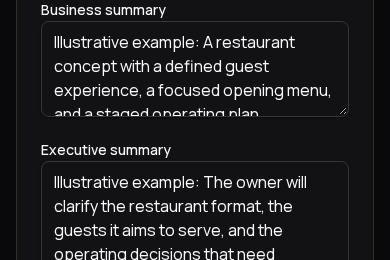
Starting a Restaurant can involve coordinating customers, operations, suppliers, and launch decisions while key details are still uncertain. Scattered notes can make priorities, costs to research, and responsibilities harder to review together. A Restaurant business plan organizes the offer, intended audience, and operating questions in one working draft. Its financial model can document revenue assumptions and startup milestones that need validation before decisions are made. This dynamic workspace can be edited as your plan changes, unlike a static PDF that can become separated from active work. Invite partners to review the plan, assign tasks, and keep the next step connected to the assumptions it depends on.
A USEFUL FIRST DRAFT
Every value below is an editable sample, not verified business research.
Illustrative example: A restaurant concept with a defined guest experience, a focused opening menu, and a staged operating plan.
Illustrative example: The owner will clarify the restaurant format, the guests it aims to serve, and the operating decisions that need research before opening. Menu, staffing, supplier, and cost assumptions will be refined with local information.
Illustrative example: Guests may be looking for a dining option that better fits their occasion, preferences, schedule, or service needs.
Illustrative example: Develop a focused menu and service routine, then test the guest experience and operating requirements before expanding.
Illustrative example: Outline site and permit questions, test a small menu, and map the staffing and supplier steps needed for a first service.
Owner-supplied supporting draft; claims are not verified research: A restaurant business plan template helps an owner describe the guest experience and the operating work required to support it. Start with the restaurant format, the food or beverage concept, and the dining occasion you want to serve. Research your own site, equipment, permits, supplier options, staffing, hours, and service needs; a sample plan cannot verify local requirements or operating costs. The executive summary can explain the concept, intended guest, and open decisions without presenting estimates as established facts. A restaurant startup plan is most useful when it distinguishes current evidence from questions that still need answers, especially before a lease, renovation, or opening date is treated as settled.
Owner-supplied supporting draft; claims are not verified research: Use Customer Problem to describe what a guest is seeking and where current options may not fit that occasion or preference. Solution can explain the proposed menu, service style, and experience you intend to test. Target Customer gives the plan a specific group of guests to learn from. Revenue Model may list Dine-in Food & Beverage, Catering, Delivery as possible channels, but the owner must decide which services suit the concept and available capacity. The sample is not a sales forecast. Next Milestones can name research into site requirements and permits, menu trials, supplier conversations, staffing decisions, and an opening sequence.
Owner-supplied supporting draft; claims are not verified research: This editable restaurant business plan includes a summary, executive summary, target customer, Customer Problem, Solution, Revenue Model, and Next Milestones. Once saved, the workspace can connect the plan to goals, next actions, optional due dates or blockers, and a weekly, monthly, or quarterly review rhythm. Use the fields to prepare a restaurant business plan example that fits your own concept, whether it is a small dining room, a counter-service idea, or a food-led catering offer. The template does not provide permit guidance, restaurant financial projections, or supplier data. Replace every illustrative detail with information verified for your location and operating model before you rely on the draft for a decision.
Owner-supplied supporting draft; claims are not verified research: Owner-supplied original subheadline: A restaurant plan helps connect the menu and guest experience with the operating work behind them. Putting service format, staffing, suppliers, permits, and launch milestones in one draft makes the decisions and unknowns easier to revisit.
COMMON STARTING QUESTIONS
Answers are illustrative starting guidance, not verified research. Confirm current costs and local requirements before acting.
Costs depend on the location, service scope, equipment, staffing, and other choices in your plan. Build a local estimate from current quotes and requirements; this template does not provide verified cost data.
Margins vary with the offer, operating costs, sales mix, and local conditions. The sample includes no verified industry benchmark, so model your own assumptions and validate them with current records.
Requirements depend on jurisdiction, business activities, premises, and staff. Check the relevant government offices or a qualified local adviser before acting; this template is not legal guidance.
Make this restaurant plan your own in the workspace.
Edit this Restaurant Template